All about the History of Sourdough Bread!
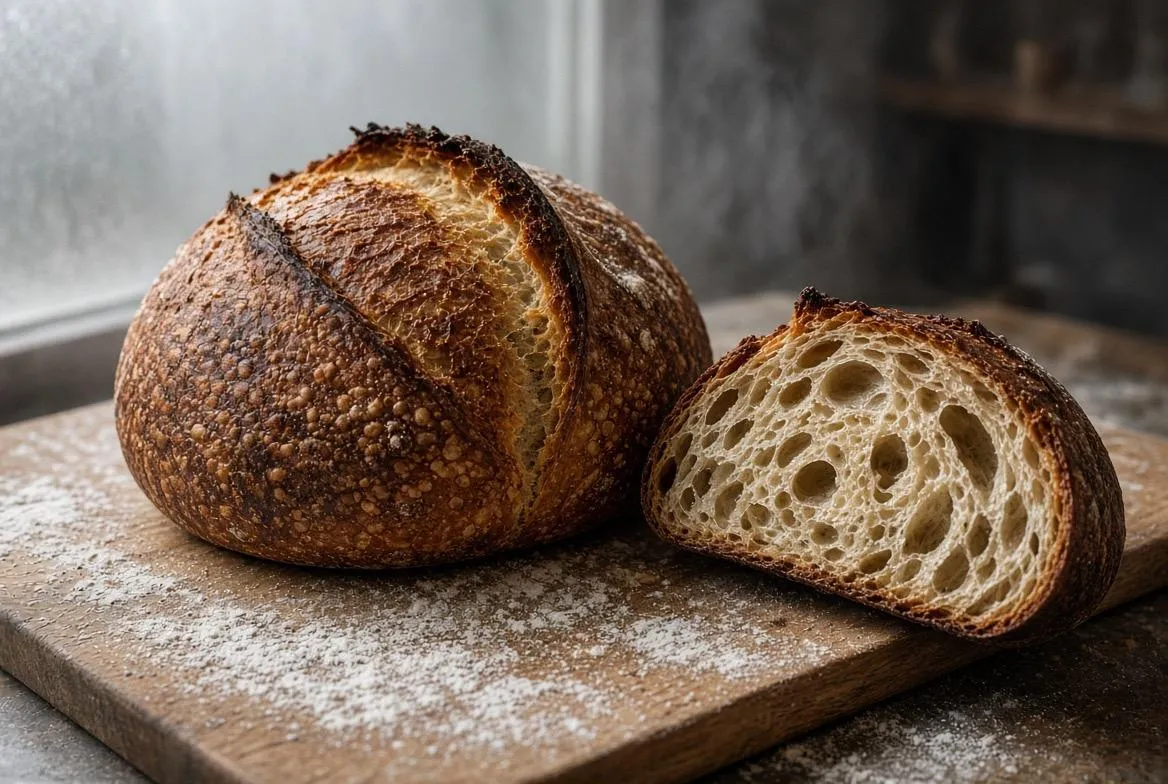
Sourdough is not a modern bakery fad. It is the original risen bread: flour and water left long enough that wild yeast and lactic-acid bacteria leaven the dough. Commercial yeast is the latecomer. Sourdough is the default method humans used for thousands of years.
What it actually is
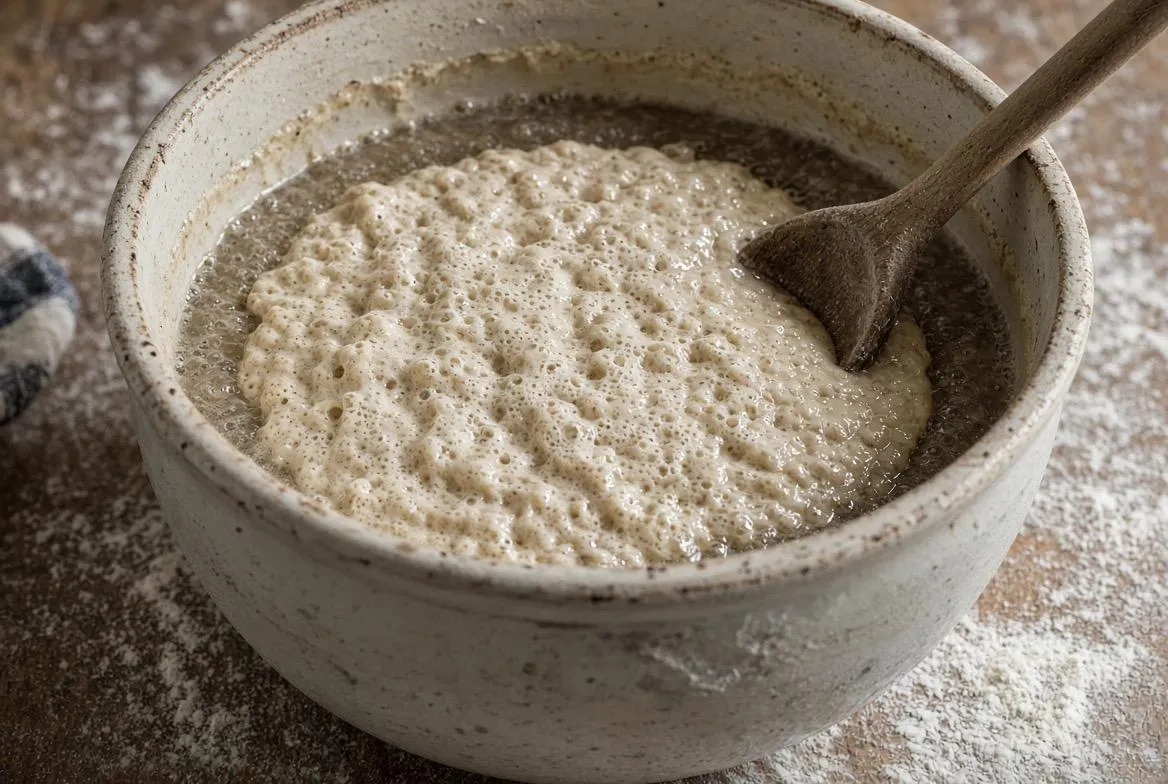
A starter is a living culture of wild yeasts plus lactic-acid bacteria in flour and water. The yeasts make carbon dioxide (the rise). The bacteria make lactic and acetic acids (the sour, the keeping quality, the flavor). Bakers keep it alive by “back-slopping”: feeding it and carrying a piece into the next dough. That practice is older than written recipes.
Before agriculture: bread, but not sour
The oldest crumbs we have are unleavened. At Shubayqa 1 in northeastern Jordan, Natufian hunter-gatherers baked flatbread about 14,400 years ago—wild barley, einkorn, oats, and club-rush tubers, cooked on hot stones. That is bread before farming. It is not sourdough. 
First fermented loaf
In 2024 archaeologists at Çatalhöyük in central Anatolia reported an uncooked, spongy mass dated to about 6600 BCE beside an oven, with wheat, barley, and pea seeds nearby. Guinness lists it as the oldest known fermented bread. If the identification holds, leavening is at least 8,600 years old. 
Egypt: bread as an industry
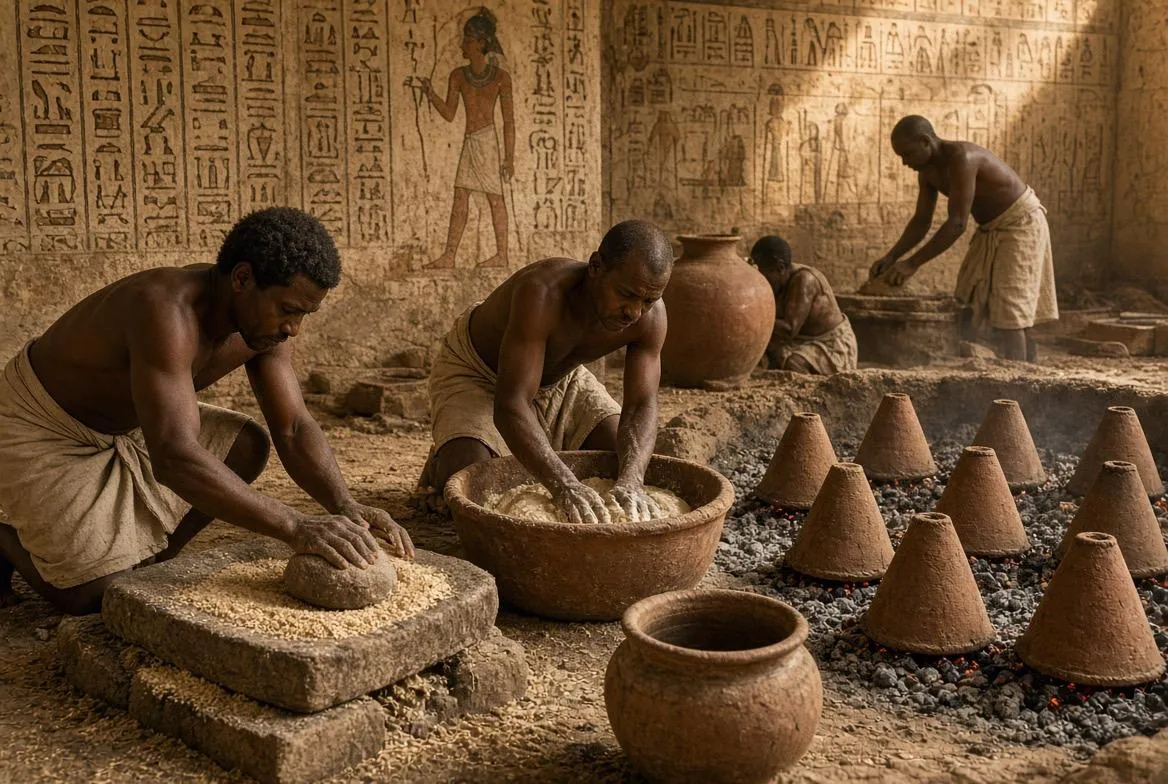
The first civilization that clearly baked risen bread at scale is ancient Egypt (roughly 3500–1500 BCE and after). Emmer and barley were ground on stone querns—so gritty that mummy teeth are worn down. Tomb paintings and bakery models show kneading, conical clay bedja pots heated and stacked in ash, and loaves in many shapes. Bread and beer together meant “meal.” Pyramid workers were rationed bread, beer, and onions. Egyptians had scores of words for bread. Whether they kept a named “starter” the way a modern baker does is not proven; they almost certainly saved dough from one batch to the next. That is sourdough practice. Seamus Blackley and collaborators later tried to revive yeast from Egyptian vessels and tomb bread; the loaves were soft and tangy, but the yeast’s true age is still debated. 
Greece and Rome: the first written starter
Greeks took Egyptian baking across the Mediterranean. The first clear literary description of a saved leaven is Pliny the Elder in the 1st century CE (Natural History, about 77 CE): millet or wheat bran soaked in wine, or dough saved from the day before. That is back-slopping on the page. Roman bakers were a licensed trade. Rye bread in northern Europe later needed sourdough even more, because rye does not rise well with yeast alone; acidity makes the loaf possible.
Europe’s levain and Sauerteig
Through the Middle Ages and into the 19th century, almost all European risen bread is sourdough or a close cousin: French levain, German Sauerteig, Italian lievito madre (still used for panettone). Bakeries kept a mother dough for generations. When Fleischmann and other commercial yeasts spread after the 1860s–70s, factories switched. Sourdough survived where rye was the grain, in mountain bakeries, and among bakers who refused the new cakes of yeast.
Gold Rush San Francisco
Sourdough did not begin in California. It became a civic myth there.
During the 1849 Gold Rush, miners carried crocks of starter because they had no reliable commercial yeast in camp. They slept with the pot in cold weather so the culture would not die. Veteran miners were nicknamed “sourdoughs.” Early camp bread was often poorly risen and too sour. The loaf that made the city famous came from professional French and Italian bakers, not from the worst camp biscuits. 
Isidore Boudin, from a Burgundy baking family, opened in San Francisco in 1849. The house story is that he took a miner’s starter and married it to French dough. Boudin still claims a mother dough from that era. In the 1906 earthquake, Louise Boudin is said to have fled with the starter in a bucket. Other Bay bakeries—Parisian, Larraburu, Colombo, Toscana—were also French or Italian levain shops. By 1854 the city had dozens of bakeries. 
In 1970–71, USDA microbiologists Leo Kline and T. Frank Sugihara isolated the bacterium that dominates many Type I sourdoughs and named it Lactobacillus sanfrancisco (now Fructilactobacillus sanfranciscensis). It eats maltose; the companion yeast (Candida / Kazachstania humilis) does not. They share the sugars instead of fighting. The species is not unique to San Francisco—it shows up in French levains, German rye, and Italian panettone—but the name stuck. The “it only works within 50 miles of the Bay” claim is folklore. 
Decline, then revival
Factory white bread and packaged yeast pushed sourdough to the margin in the 20th century. From the 1970s on, artisan bakers (Tassajara, Acme in Berkeley, and later Tartine) brought long fermentation back. The 2020 lockdowns produced a global starter boom: people fed jars on kitchen counters because they could not buy yeast and because the process is something you can watch.
Timeline written out
c. 12,400 BCE. Unleavened flatbread at Shubayqa 1, Jordan.
c. 6600 BCE. Possible fermented bread at Çatalhöyük, Anatolia.
c. 3500–1500 BCE. Egyptian bakeries leaven emmer and barley at industrial scale; bread is wages and offering.
1st century CE. Pliny describes saving dough as leaven.
Middle Ages–1800s. Levain and Sauerteig are ordinary European bread.
1849. Boudin opens in Gold Rush San Francisco; miners called sourdoughs.
1860s–70s. Commercial yeast begins to replace wild leaven in factories.
1906. Boudin starter rescued in the earthquake, according to family lore.
1971. L. sanfranciscensis named from San Francisco loaves.
1970s–2010s. Artisan revival.
2020. Home-starter wave.
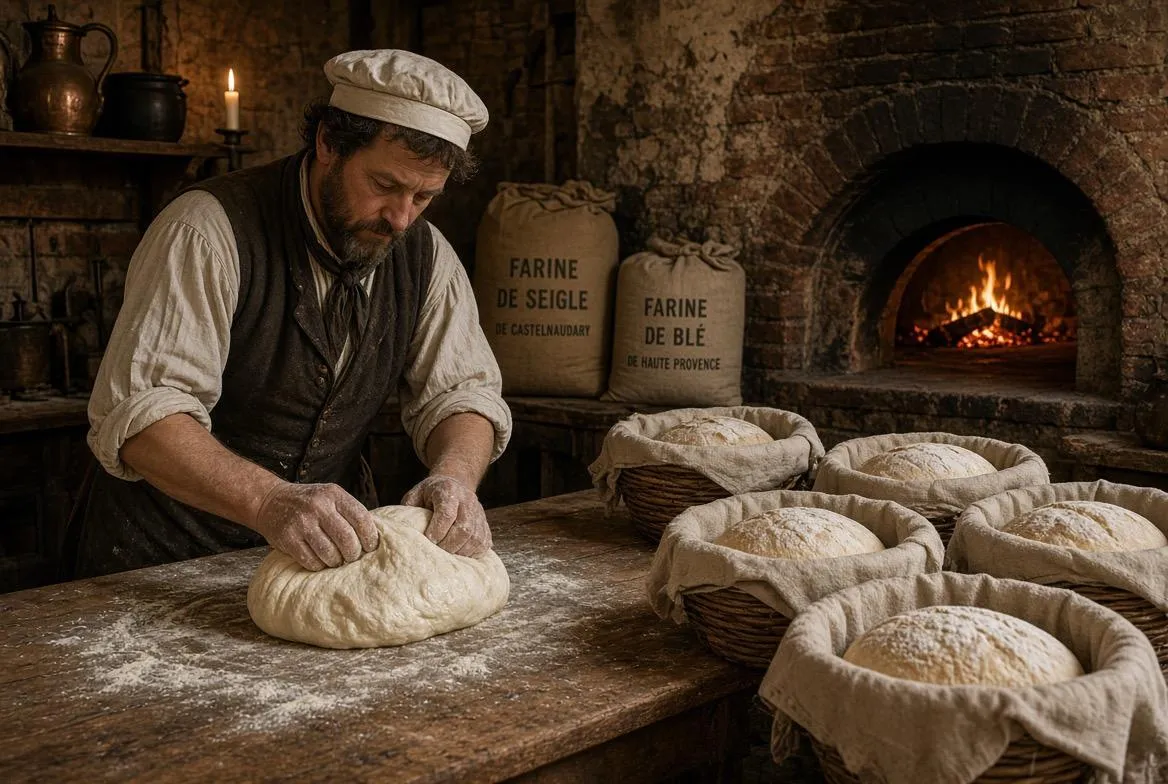
The through-line is practical: if you mix flour and water and wait, the air and the grain do the rest. Egypt scaled it. Rome wrote it down. Europe lived on it. San Francisco branded it. The pictures below follow that path—quern and clay pot, saved starter, Gold Rush loaf, scored modern crumb.
The deep assurance that comes from full alignment
LEARN ABOUT OTHER FAMOUS OLD TOWNS: Old Town San Diego, Old Towne Orange, Old Town San Clemente, Old Town Monrovia, Old Town Temecula, Old Town Pasadena, Old Town Sacramento, Old Town Bern, Old Town Stockholm, Old Town Prague, Old Town Lijiang, Old Town Alexandria, Old Town Albuquerque, Old Town Cottonwood, Old Town Quedlinburg, Old Town Rothenburg ob der Tauber, Old Town Marienplatz Munich, Flipside Point, Alexanderplatz Old Town Berlin, Old Town Chicago, Old Town Kissimmee Florida, Phuket Old Town, Old Town Asakusa, Old Town Madrid Major Square, Kraków Old Town, Old Town London Piccadilly Circus,
This is a Paragraph Font
~ SPAGHETTI WESTERN QUOTE:
“Courage is being scared to death and saddling up anyway!” – John Wayne
Visit Us At:
OLD TOWN SAN CLEMENTE
~ A Little Spanish Spaghetti Western Old Town ~
111 W. Avenida Palizada, San Clemente, CA 92672
"Thanks For Being Incredible!"
GREAT ARTICLES: Best places to eat, History of Del Mar Street, History of San Clemente Outlets, History of T-Street Beach,
History of the Pier, History of Cars and Coffee, History of Los De Juarez Burritos, History of the Smash Burger, History of Sourdough Bread, History of Sourdough Cookies, History of Sushi,
This website is owned and operated by (c) 2025 - University of San Clemente Inc.