
All about the Historical San Clemente Pier!
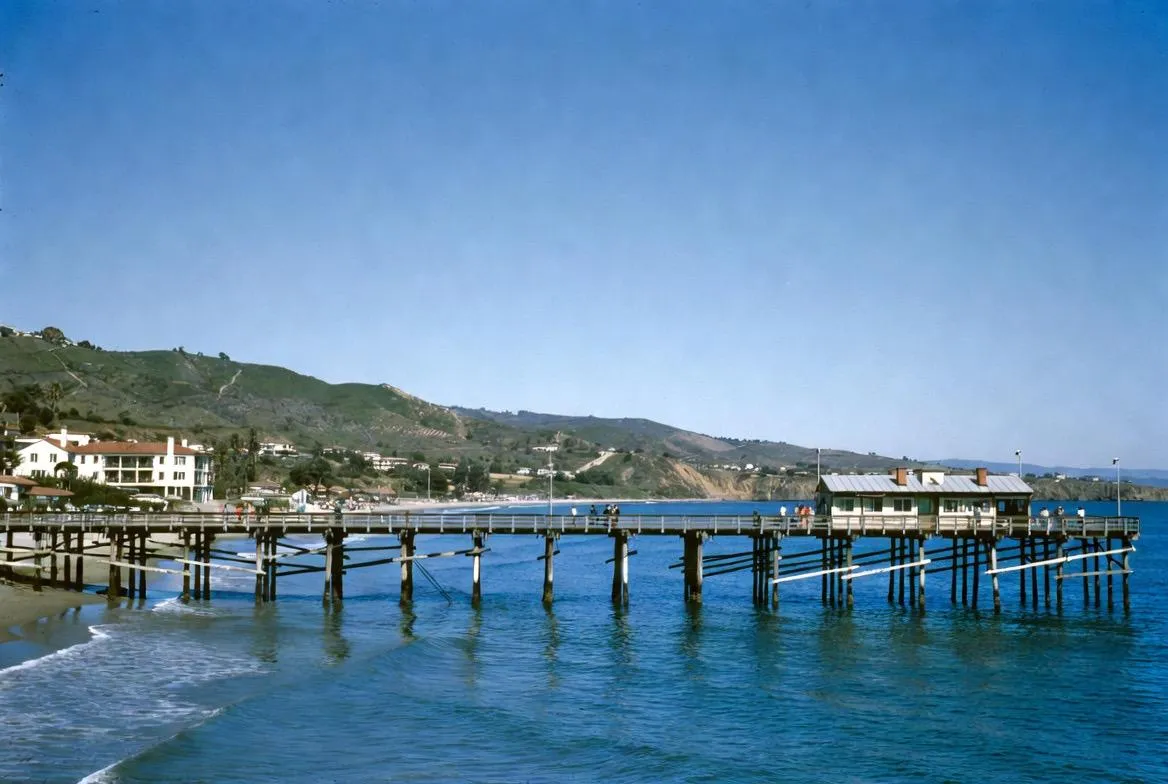
The San Clemente Pier is a historic landmark and iconic fixture in San Clemente, California (Orange County), often called the “heart” of the city. It serves as a popular spot for fishing, surfing, dining, sightseeing, sunsets, and recreation, attracting over 2 million visitors annually. It is a designated San Clemente Historic Resource. 
Founding and Construction (1920s)
San Clemente was founded as a master-planned “Spanish Village by the Sea” by Ole Hanson, former mayor of Seattle and a real estate developer. In 1925, Hanson (with financial backing from a syndicate) envisioned a Mediterranean-style resort community with public amenities, including a fishing pier, to attract residents and tourists. 
• The original San Clemente Municipal Fishing and Pleasure Pier was built in 1928 as a gift from Hanson to the community (no cost to citizens). It was a wooden structure approximately 1,200 feet (about 366 meters) long. 
• It aligned with Hanson’s broader vision, which included Spanish Revival architecture (red tile roofs, white walls), public beaches, parks, a pool, and other features. The pier was part of the “Pier Bowl” area, with Avenida Del Mar designed to lead down to it. 
• The city incorporated in 1928, and the pier quickly became central to its identity and economy.
Prohibition Era and Rum Running (1920s–1930s)
During Prohibition (1920–1933), the pier gained notoriety as a site for illegal alcohol smuggling. Boats would deliver liquor at night via a hidden hatch under the snack bar at the end of the pier, supplying speakeasies in the area. It was a favorite secret drop-off point for rum runners in the 1930s. 
1939 Storm and Rebuild
In September 1939, a major storm (linked to hurricane swell) severely damaged or largely destroyed much of the wooden pier. It was rebuilt afterward (reportedly at a cost of around $40,000 in one account). 
The pier endured through the Great Depression (which hit San Clemente hard, causing population decline and Hanson’s own financial ruin) and subsequent decades.
1983 El Niño Storm and Major Rebuild
In March 1983, a powerful El Niño winter storm caused massive damage: roughly 400 feet from the end and 80 feet from the middle were torn out. City firefighters preemptively cut an 80-foot section to try to save structures. 
• Reconstruction took about two years and cost around $1.4 million. The pier reopened in June 1985. It was rebuilt with improvements: higher elevation, steel reinforcement (and later concrete pilings in some descriptions), and extended to 1,296 feet (about 395 meters)—nearly a quarter-mile long. 
• It survived a subsequent strong El Niño in 1988/1989 with less damage. 
Later Renovations and Maintenance
• 2008–2009: Extensive renovation/repairs were completed. 
• The pier is maintained with support from the nonprofit Pier Pride, which partners with the city to address needs beyond municipal funding and preserve its historic character. 
• It has faced occasional minor damage from high surf (e.g., loose planks in 2026 that were quickly repaired), but major structural elements like pilings have held up. 
Features and Significance Today
• Length: 1,296 feet. 
• Amenities include a seafood restaurant (historically at the end or base), fishing, surfing spots (lefts and rights around the pier), beaches, and proximity to the San Clemente Pier Amtrak/Metrolink station. 
• It remains a hub in the Pier Bowl area (about 56 acres), blending recreation, dining, historic resources (like nearby Casa Romantica), and views of the Pacific, Catalina, and San Clemente Island. 
The pier symbolizes the city’s resilience, Spanish Colonial Revival heritage, and coastal identity. It has weathered economic crashes, Prohibition intrigue, multiple destructive storms, and evolving development pressures while staying a beloved public space. 
For the most current conditions (as of 2026), it is open and actively used, though like all ocean piers, it requires ongoing monitoring for wave damage. Local sources like the San Clemente Historical Society, city documents, and Pier Pride provide deeper dives into photos, timelines, and preservation efforts.
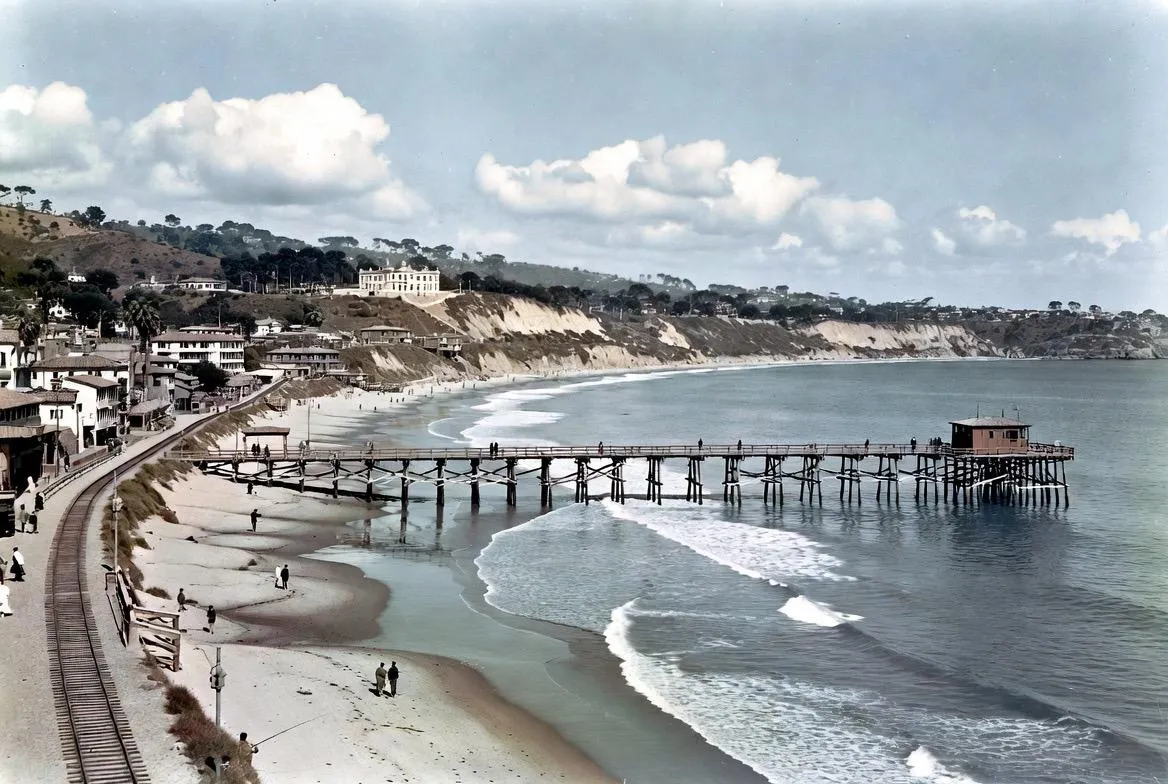
Construction Cost and Early Operations
The original 1928 wooden pier reportedly cost around $75,000 to build. It initially accommodated fishing boats docking alongside and served as a key attraction for Hanson’s development scheme. A bait shop/cafe at the end became central to its Prohibition-era activities.64
Ole Hanson gifted it to the city, aligning with his public-amenities focus (beach, pool, parks, etc.). Early on, it featured steps underneath for boat access, with the iconic Casa Romantica (Hanson’s own Spanish Colonial Revival mansion, now a cultural center) overlooking the Pier Bowl from the bluff.78
Deeper Dive into Prohibition Rum-Running
The pier’s role in bootlegging (1920–1933) is one of its most intriguing chapters. Smugglers used boats offshore to offload liquor through a hidden trap door beneath the snack bar/bait shop at the pier’s end. Crates were then transferred to waiting cars on the beach or nearby. This made San Clemente part of the broader Southern California rum-running network, leveraging its relatively remote coastline at the time.6388
Local enforcement stories include tales of chases, bribes (e.g., one officer reportedly turning down $5,000), and use of coastal caves for storage. The activity largely ended with repeal in 1933, but it added a layer of “Wild West” lore to the pier’s early years.65
Architectural and Community Evolution
1940s–1950s: Photos show a relatively undeveloped beachfront with the wooden pier prominent, railroad tracks running parallel (Amtrak/Metrolink station is still there today), and cabanas for rent. It was a hub for fishing and leisure.73
Additions over time included “Tower Zero” in 1967 and the Fisherman’s Restaurant replacing boat storage at the base in 1981.64
The pier has always been wooden (rebuilt as such in 1985 with reinforcements), contrasting with some concrete piers elsewhere.
Storm Resilience and Engineering Changes
The 1939 and 1983 events were the most destructive, but the pier has faced other high-surf episodes. Post-1983 rebuilds emphasized durability: raised deck, stronger materials, and better wave resistance. Despite this, maintenance is constant due to the harsh marine environment.72
Preservation and Pier Pride / San Clemente Pier Conservancy
The nonprofit Pier Pride (recently rebranded or associated with the San Clemente Pier Conservancy) has been instrumental for about a decade. It fills funding gaps left after redevelopment agency changes, supports restorations, maintenance (e.g., cleaning partnerships), and keeps the pier as a “historic self” while enhancing visitor experience. They partner with the city for projects and events.9196
The pier is part of broader Pier Bowl planning efforts dating back to the 1970s, aimed at revitalization while preserving views, history, and coastal access under California’s Coastal Act.51
Cultural and Recreational Legacy
Beyond fishing and smuggling tales, the pier anchors San Clemente’s surf culture, tourism, and community events. It’s less crowded than some other OC piers, offering a more relaxed vibe with panoramic views. Nearby Ole Hanson Beach Club (also 1928, renovated) complements it as another historic amenity.
Hanson’s vision of a harmonious, park-like Spanish village endured economic hardship (1929 crash hit hard), population shifts, and later development pressures (e.g., 1970s demolitions that spurred historic preservation). The pier remains one of the few original public gifts still thriving.
The deep assurance that comes from full alignment
LEARN ABOUT OTHER FAMOUS OLD TOWNS: Old Town San Diego, Old Towne Orange, Old Town San Clemente, Old Town Monrovia, Old Town Temecula, Old Town Pasadena, Old Town Sacramento, Old Town Bern, Old Town Stockholm, Old Town Prague, Old Town Lijiang, Old Town Alexandria, Old Town Albuquerque, Old Town Cottonwood, Old Town Quedlinburg, Old Town Rothenburg ob der Tauber, Old Town Marienplatz Munich, Flipside Point, Alexanderplatz Old Town Berlin, Old Town Chicago, Old Town Kissimmee Florida, Phuket Old Town, Old Town Asakusa, Old Town Madrid Major Square, Kraków Old Town, Old Town London Piccadilly Circus,
This is a Paragraph Font
~ SPAGHETTI WESTERN QUOTE:
“Courage is being scared to death and saddling up anyway!” – John Wayne
Visit Us At:
OLD TOWN SAN CLEMENTE
~ A Little Spanish Spaghetti Western Old Town ~
111 W. Avenida Palizada, San Clemente, CA 92672
"Thanks For Being Incredible!"
GREAT ARTICLES: Best places to eat, History of Del Mar Street, History of San Clemente Outlets, History of T-Street Beach,
History of the Pier, History of Cars and Coffee, History of Los De Juarez Burritos, History of the Smash Burger, History of Sourdough Bread, History of Sourdough Cookies, History of Sushi,
This website is owned and operated by (c) 2025 - University of San Clemente Inc.