All about the History of the San Clemente Outlets!
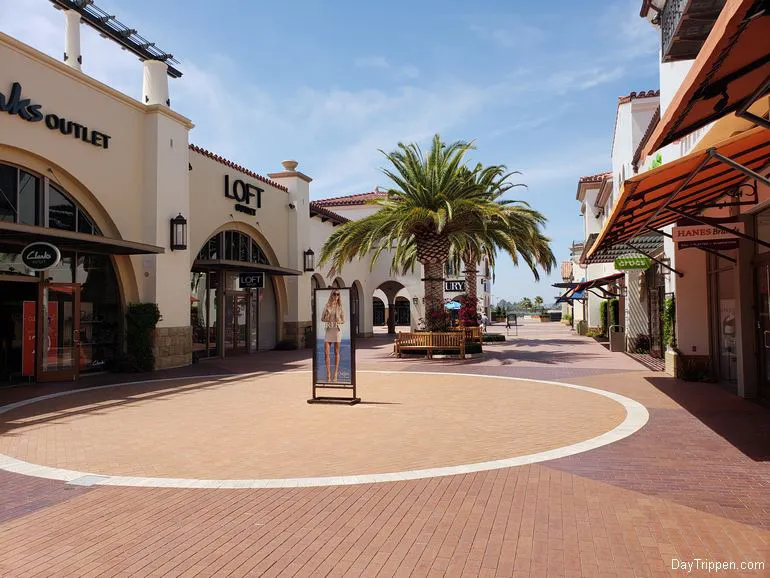
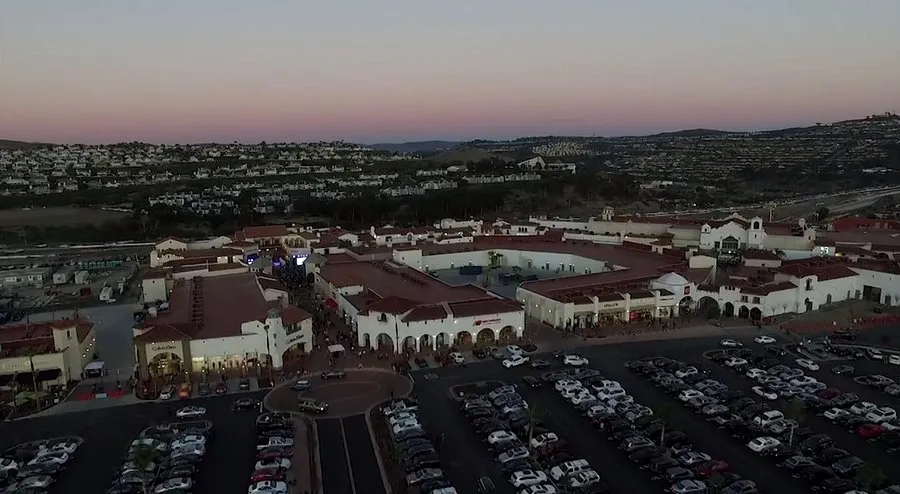
The Outlets at San Clemente (commonly called San Clemente Outlets) is an open-air outlet shopping and dining destination at 101 W Avenida Vista Hermosa, San Clemente, CA 92672. It occupies a prime 52-acre bluff-top site within the larger Marblehead Coastal development, offering panoramic Pacific Ocean views. It is Orange County’s only coastal outlet center and stands out for its Mediterranean/Spanish-style architecture (white stucco, red terra cotta tile roofs, numerous archways), landscaped plazas, ocean breezes, and convenient I-5 location (midway between Los Angeles and San Diego).
Typical hours are 10:00 AM – 8:00 PM (with variations for holidays like July 4). It features 65+ stores and eateries with designer brands at significant discounts (often up to 70% off), restaurants, ample parking (over 3,000 spaces), and shopper amenities such as a VIP/Elite Rewards loyalty program with lounge access, valet, concierge, Wi-Fi, stroller/wheelchair rentals, a Mother’s Lounge, and high-quality restrooms.
The center emphasizes a “sense of place” with open-air plazas, seating areas overlooking views, and a mix of outlet and traditional retail. It draws locals, tourists, and I-5 travelers.
Detailed History and Development Timeline
The project’s roots tie into San Clemente’s broader coastal planning and faced nearly two decades of complex entitlements typical of California coastal development.
• Pre-1990s to 1998: The site falls within the Marblehead Coastal Specific Plan area (248 acres total, bounded by the ocean to the west and I-5 to the east). Earlier proposals (e.g., by the Lusk Company in the 1980s) envisioned homes, a golf course, commercial uses, and a resort hotel. The Specific Plan was formally adopted in 1998 (revised in 2004).
• ~1997 onward: Steven L. Craig of Craig Realty Group (Newport Beach, CA) becomes involved with the 52-acre outlet portion. Craig, a veteran outlet developer, envisioned a high-quality, architecturally distinctive center capitalizing on the ocean views, bluff-top location, freeway frontage, affluent local demographics, and tourism potential.
• 2003: The California Coastal Commission approves a scaled-back Marblehead Coastal plan. This includes approximately 313 homes, a significant commercial component (originally envisioned up to ~675,000 sq ft total, with the outlets as the main retail piece), hiking trails, parks, and habitat/open space preservation (roughly half the site in some descriptions).
• Mid-2000s challenges: Ownership involved SunCal Companies (backed heavily by Lehman Brothers, which invested billions in California land deals). The 2008 Lehman Brothers bankruptcy triggered SunCal’s bankruptcy filing. This led to prolonged, multi-jurisdictional litigation over control of the assets. The recession added further delays. 
• ~2014: After years of negotiations, public hearings (reportedly 125+), environmental reviews, and refinements, construction begins on the first phase of the outlets. Key mitigations include advanced stormwater treatment systems (large tanks to clean runoff from the center, parking lots, I-5, and nearby areas before ocean discharge) and drought-tolerant native landscaping with minimal turf and drip irrigation.
• November 12, 2015: Ribbon-cutting ceremony and grand opening after 18 years of development effort. City officials join developer Steve Craig (then around age 60) for the event, followed by grand opening festivities November 12–15. The first phase delivered roughly 325,000–350,000+ sq ft (with plans scaling toward 500,000+ sq ft), initially featuring 35–70 retailers and dining options. Early tenants included Calvin Klein, H&M, Guess, Columbia, Le Creuset, DC Shoes (local brand), Panera Bread, Ruby’s Diner, and others. Four ocean-view restaurants were planned. 
Phase 2 was envisioned to add ~50 more stores (and eventually the hotel), guided by performance of the first phase.
Developer Background: Steven L. Craig & Craig Realty Group
Steven L. Craig founded Craig Realty Group in 1995 after a career in outlet development. His earlier work included partnering on Desert Hills Premium Outlets (Cabazon) in the 1980s–early 1990s and serving as COO/Director at Chelsea Property Group (later part of Simon), where he helped develop Camarillo Premium Outlets.
Craig Realty Group specializes in upscale factory outlet centers in architecturally rich environments. The company owns and operates 14 outlet centers across 8 states (nearly 5 million sq ft total). The Outlets at San Clemente is frequently described as award-winning and a culmination of Craig’s expertise in creating high-performing, visitor-friendly centers. Craig has emphasized maximizing the site’s ocean views, creating a “Main Street” feel, and focusing on shopper comfort (noting that ~80% of shoppers are women). 
Design, Environmental Features, and Amenities
The center uses Spanish/Mediterranean-inspired architecture with 341 archways, durable terra cotta tile roofs (designed to last 50+ years and resist fading), and earthquake-resistant steel reinforcement. It prioritizes views and open space while meeting strict coastal environmental standards. Amenities were thoughtfully designed, including premium restrooms and family features.
Post-Opening Developments (2015–2026)
• The center has operated successfully as a retail and dining destination with seasonal promotions and events.
• In January 2024, Craig Realty refinanced the property with a $140 million loan package (Pacific Life Insurance Company and MetLife).
• Hotel plans: A limited-service luxury hotel (up to 130 rooms, originally approved as part of the commercial component) with ocean views was long delayed. In September 2025, the San Clemente City Council approved a height exception and updated plans for “The Lodge at San Clemente,” including a rooftop restaurant and bar. As of mid-2026, it has not yet been built.
• Minor post-opening issues included a 2017 dispute with the city over the number and approval of temporary freeway-facing (I-5) banner signs, which drew some resident concerns about visual clutter and views. The matter involved permitting and litigation elements. 
Economic and Community Impact
The project created ~1,000 construction jobs and supported hundreds to ~1,000+ permanent positions (with growth expected as restaurants and the hotel came online). It introduced significant new taxable retail sales to San Clemente, which previously lacked major retail anchors. It serves as a convenient stop for travelers and complements the surrounding Sea Summit residential community (homes developed around the same timeframe by Taylor Morrison) and preserved open spaces/trails in the Marblehead Coastal area.
Summary of Key Facts
• Opened: November 12, 2015 (after ~18 years of planning/approvals starting ~1997).
• Developer/Owner: Craig Realty Group (Steven L. Craig).
• Size: ~52 acres; first phase ~325k–350k+ sq ft built, with capacity for more.
• Unique features: Ocean views, open-air Mediterranean design, coastal location.
• Current scale: 65+ stores & eateries; strong sales events; popular local and tourist destination.
The Outlets at San Clemente represents a long-gestating but ultimately successful example of coastal California retail development—overcoming ownership changes, bankruptcies, environmental reviews, and public processes to deliver a distinctive shopping experience that leverages its spectacular setting. It continues to evolve with the recent hotel approvals signaling further growth in the Marblehead area.
For the most up-to-date store directory, events, or hours, visit the official site: outletsatsanclemente.com. Local news archives (OC Register, San Clemente Times/Journal) and city planning documents provide excellent primary sources for deeper dives into specific approvals or the broader Marblehead Coastal Specific Plan.
Revenue and Economic Impact
Specific annual revenue figures for the Outlets at San Clemente (tenant sales, center net operating income, or exact rent rolls) are not publicly disclosed in detail, as it is a privately owned and operated center by Craig Realty Group. However, here is what is known from city planning documents, news reports, and pre-/post-opening coverage:
Pre-Opening Expectations (2014–2015)
City officials viewed the Outlets (and the broader Marblehead Coastal development) as a significant new source of sales tax revenue to help fund city services and close budget gaps.
• It was expected to generate substantial taxable retail sales in a city that previously lacked major retail anchors.
• One key use: Funding ongoing operations and maintenance for projects like Vista Hermosa Sports Park (approximately $1 million per year needed once proceeds from an earlier Target property sale ran out around FY 2016). 
Early Post-Opening Reality (2016)
In February 2016 (a few months after the November 2015 opening), San Clemente officials lowered their first-year revenue forecast for the Outlets.
• Original expectation: Around $825,000 in tax revenue for the fiscal year.
• The figure was revised downward due to slower-than-expected ramp-up in sales. 
A later reference (around 2024) from the City Manager’s office mentioned expected sales tax revenue in the range of about $300,000 (context suggests an adjusted or ongoing projection rather than peak performance).
Broader Economic Contributions
• Jobs: Roughly 1,000 construction jobs during build-out. Permanent employment was projected at around 1,000 positions once fully operational with restaurants and other tenants (initially reported around 700 at opening, with growth expected).
• Tax base expansion: Increased sales tax from retail transactions, plus property taxes from the overall Marblehead Coastal project (including the Outlets and Sea Summit residential development). This helped diversify and strengthen the city’s revenue sources.
• Indirect benefits: Attracted shoppers, tourists, and I-5 travelers; supported local dining and services; positioned San Clemente as more of a retail/tourism destination. The center was described as the city’s largest retail project at the time.
• Ongoing role: Continues to contribute to the local economy through employment, visitor spending, and taxes. It remains a popular destination with regular sales events and an Elite Rewards program.
Bottom line on revenue: While exact current figures are not public, the Outlets have delivered meaningful (if initially slower-than-hoped) sales tax revenue to San Clemente and expanded the city’s commercial tax base. Performance appears to have stabilized as a steady contributor rather than a massive windfall. Private operator revenue (from rents and center operations) is not disclosed.
Environmental Impacts
The Outlets at San Clemente were developed under the Marblehead Coastal Specific Plan and underwent California Environmental Quality Act (CEQA) review, including the original Marblehead Coastal EIR (certified ~1998, with addenda) and later supplemental reviews. The project included notable positive environmental mitigations and habitat enhancements, alongside standard urban development impacts that were addressed through design and conditions.
Positive Environmental Outcomes & Mitigations
• Habitat Creation & Restoration: As part of the broader Marblehead/Sea Summit development, a degraded coastal ravine (previously used for cattle grazing) was transformed into an 8-acre wetland habitat. This was a condition agreed upon with the California Coastal Commission.
• The wetland supports native vegetation and wildlife, including snowy egrets, mallards, red-wing blackbirds (and potential tricolor blackbirds), waterfowl, raptors, and other species (bobcats, deer, rabbits, etc.).
• It significantly boosted the local population of the coastal California gnatcatcher (a sensitive species), increasing pairs from fewer than 5 to over 15 through coastal sage scrub restoration (a rare habitat of which less than 10% remains worldwide).
• Public trails were added with monitoring to protect sensitive areas; the preserve is managed in perpetuity by the Center for Natural Lands Management with dedicated funding (annual endowment).
• Innovative Stormwater Management & Water Quality Protection:
• Detention basins and treatment systems capture and treat dry-weather runoff and “first-flush” stormwater from the Outlets, portions of I-5, and upstream residential areas.
• Runoff is diverted into the natural canyon/wetland system for natural treatment instead of direct discharge to the ocean (reducing typical urban ocean pollution).
• Larger storm flows receive additional treatment via catch basins, basins, and underground vaults before any ocean release.
• This system also helps sustain the created wetland habitat. 
• Landscaping & Design: Drought-tolerant native plants with minimal turf and drip irrigation (addressing water conservation in a coastal/drought-prone area). Architecture and site planning aimed to preserve ocean views and integrate with the natural bluff-top setting.
• Overall Context: The project incorporated protected oceanfront habitat into the development rather than fully developing the site, preserving significant open space within the 248-acre Marblehead Coastal plan.
Potential Negative or Adverse Impacts (Addressed via Review)
• A 2017 Draft Supplemental EIR (SEIR) was prepared specifically for amendments to the freeway-oriented sign program at the Outlets. It built on the prior Marblehead Coastal EIR and focused on:
• Aesthetics/visual impacts: Sign size, number, lighting, light pollution, visual clutter, and effects on night sky, nearby residences, and community character.
• Traffic & safety: Potential driver distraction from signs visible on I-5, congestion, and safety at freeway exits.
• Biological resources: Lighting impacts on wildlife.
• Land use/planning consistency: Compatibility with city policies.
Public scoping drew significant comments. Alternatives (e.g., reduced size/number of signs, different hours) were analyzed. Some impacts were deemed potentially significant and unavoidable in certain scenarios, which can require a Statement of Overriding Considerations under CEQA. 
• Typical development effects (noise, traffic, construction impacts) were analyzed in the original EIR and mitigated where feasible.
• No major ongoing environmental controversies or violations appear prominent in recent coverage. The project largely followed required processes, with habitat restoration and water quality improvements standing out as notable net positives.
Summary on Environment: The Outlets included substantial mitigation and even net habitat gains through wetland creation, species support (especially gnatcatchers), and advanced stormwater treatment that protects ocean water quality while sustaining new ecosystems. Ancillary elements like signage required additional environmental scrutiny. Overall, it represents a relatively environmentally conscious coastal retail development compared to older models, thanks to Coastal Commission involvement and CEQA requirements.
The deep assurance that comes from full alignment
LEARN ABOUT OTHER FAMOUS OLD TOWNS: Old Town San Diego, Old Towne Orange, Old Town San Clemente, Old Town Monrovia, Old Town Temecula, Old Town Pasadena, Old Town Sacramento, Old Town Bern, Old Town Stockholm, Old Town Prague, Old Town Lijiang, Old Town Alexandria, Old Town Albuquerque, Old Town Cottonwood, Old Town Quedlinburg, Old Town Rothenburg ob der Tauber, Old Town Marienplatz Munich, Flipside Point, Alexanderplatz Old Town Berlin, Old Town Chicago, Old Town Kissimmee Florida, Phuket Old Town, Old Town Asakusa, Old Town Madrid Major Square, Kraków Old Town, Old Town London Piccadilly Circus,
This is a Paragraph Font
~ SPAGHETTI WESTERN QUOTE:
“Courage is being scared to death and saddling up anyway!” – John Wayne
Visit Us At:
OLD TOWN SAN CLEMENTE
~ A Little Spanish Spaghetti Western Old Town ~
111 W. Avenida Palizada, San Clemente, CA 92672
"Thanks For Being Incredible!"
GREAT ARTICLES: Best places to eat, History of Del Mar Street, History of San Clemente Outlets, History of T-Street Beach,
History of the Pier, History of Cars and Coffee, History of Los De Juarez Burritos, History of the Smash Burger, History of Sourdough Bread, History of Sourdough Cookies, History of Sushi,
This website is owned and operated by (c) 2025 - University of San Clemente Inc.